
The forward view: bulkers & tankers
The forward call
India has asked its coal miners and railways to roughly triple the coal held at power stations by the end of March. Most of that coal is expected to come from domestic mines, but our forecast now has thermal coal imports rising from January as well.
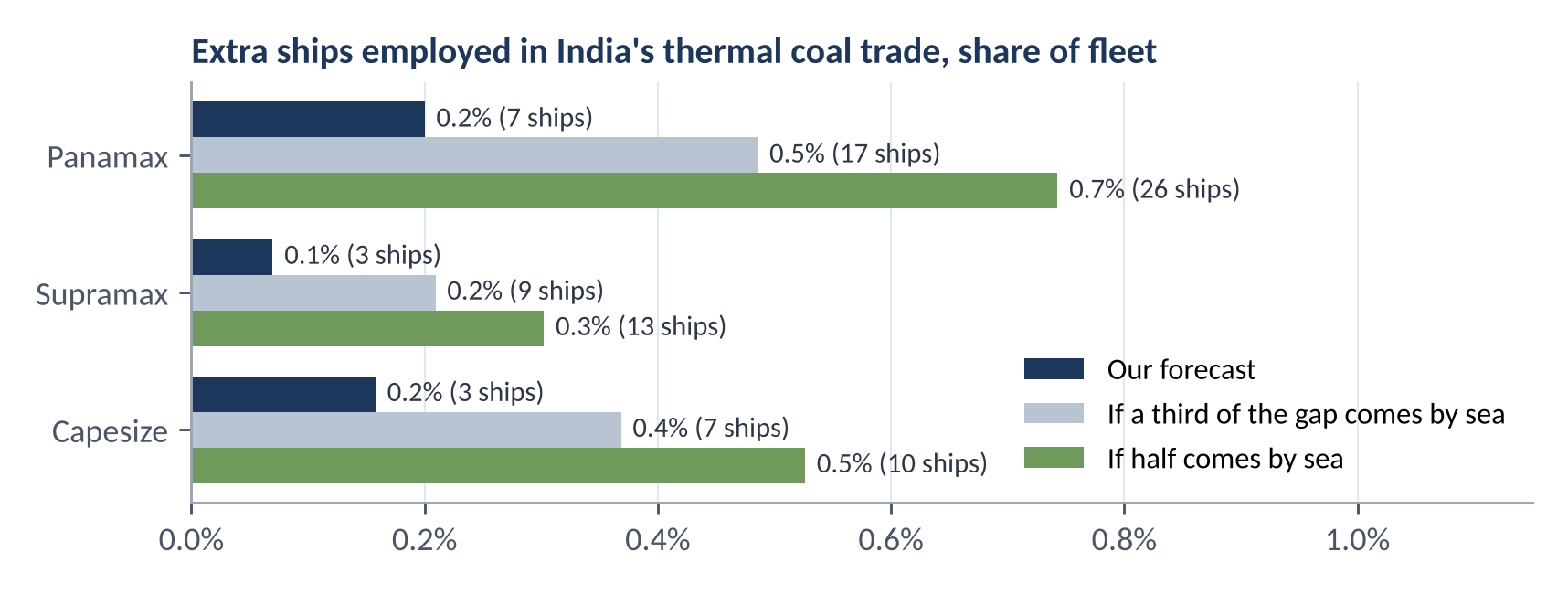
For dry bulk shipping, that looks like work for around 13 more ships between December and March than a year earlier, about half of them Panamaxes.
How stocks got this low
Weaker monsoon rain cut hydro output this year, and coal-fired power stations made up the difference. Coal generation in October was about a quarter higher than a year earlier. Burn ran ahead of deliveries, and by mid-October half of India's coal plants held less than three days of fuel. Deliveries from the mines have since picked up, but stocks have yet to be rebuilt.
What is moving by sea
So far this year India's thermal coal imports have run a little below last year, as domestic output rose and the government asked power plants to blend less imported coal. Our forecast has them turning higher from January, with December to March about 8% above a year earlier and 2027 around a tenth above 2026. Coking coal for the steel industry is a separate story, growing more steadily in step with new steel capacity, and is not covered here.
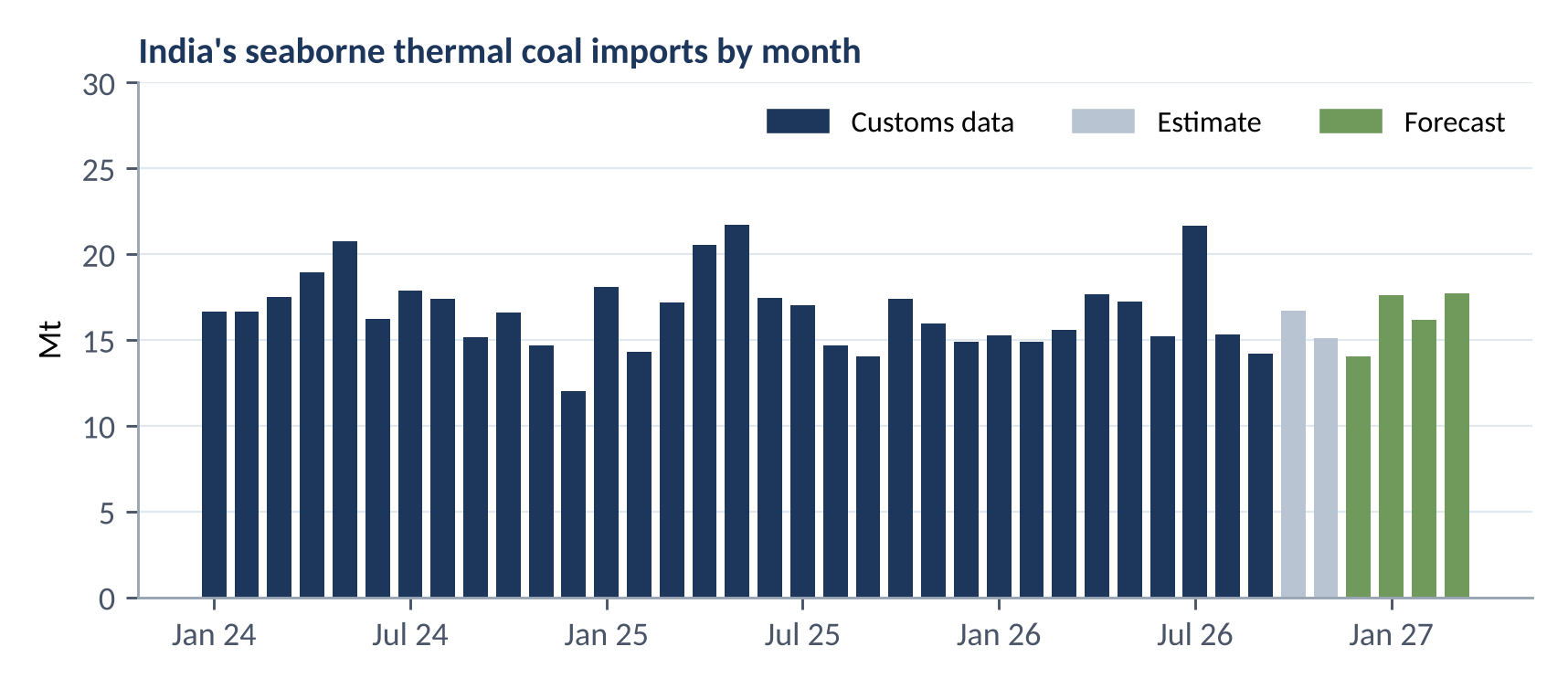
Domestic coal is still likely to do most of the work. Coal India holds large stocks at its pitheads and rail deliveries have been stepped up. The extra imports in our forecast cover only about an eighth of the planned restocking.
Who carries the coal
Indonesia supplies close to half of India's thermal coal imports, with South Africa, Russia, the US and Australia making up most of the rest. Panamaxes carry around half the tonnage, and Capesizes and Supramaxes share the remainder.
Voyage lengths vary widely. A round voyage from Indonesia takes under a month and one from the US more than two, with most ships leaving India in ballast.
Extra ships in the trade
On our forecast, the extra coal between December and March keeps around 13 more ships employed in the trade than a year earlier, about half of them Panamaxes. That is a small share of the fleet, about a fifth of one per cent of the world's Panamaxes and Kamsarmaxes. If a third of the restocking came by sea, the Panamax share would rise to about half of one per cent, and to under one per cent if half came by sea. On its own, India's restocking looks more likely to support Panamax demand at the margin than to change the balance of the market.
Is India becoming the next swing buyer?
China has long been the swing buyer in seaborne thermal coal, with imports moving by tens of millions of tonnes from one year to the next, mostly following policy changes in Beijing. India's yearly changes have been smaller, and have narrowed as domestic output grew, while China's have widened.
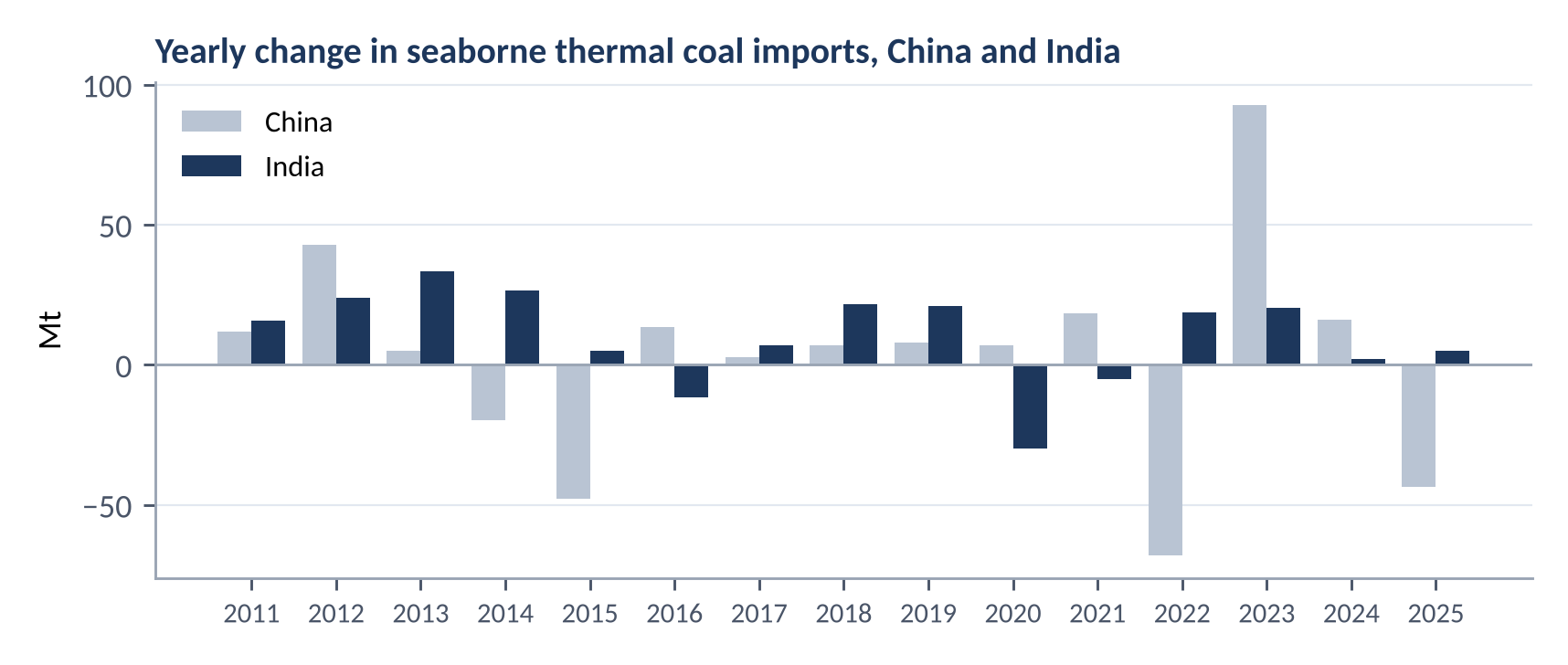
What may change is the cause. India's swings look increasingly tied to the weather, through heat, rainfall and hydro output, and to how quickly rail can move coal from the mines. With demand still growing, any shortfall in mine output or rail, even for a few months as this year, would fall on imports. Our view is that India may become a second swing buyer beside China over the next decade, rather than replace it.
Risks and our view
- Higher imports. A hot April or May, hydro output staying low into next year, or domestic output and rail despatch falling short of the target.
- Lower imports. Domestic despatch covering most of the gap, as pithead stocks suggest it can, continued growth in renewable generation, cheaper gas if the Strait of Hormuz reopens to normal traffic, or an Indonesian export levy or tighter quotas.
- Least certain call. How much of the restocking comes by sea. Domestic stocks and import policy point to a small share, while the size and timing of the target point to a larger one.
Our view. India's restocking looks set to come mostly from domestic mines and rail, but our forecast shows thermal coal imports picking up from January. That adds work for around 13 more ships through March, about half of them Panamaxes. The further rail deliveries fall behind, the more of the restocking is likely to come by sea.
Behind the analysis
The same country trade data and forecasting framework are available to your team, on your own commodities and routes.
Book a demoData note
Data from Tradeviews research. Imports are India's recorded customs imports of thermal coal carried by the dry bulk fleet, with customs data to September 2026, estimates for October and November, and forecast from December.
For information only; not investment advice.