
The forward view: bulkers
The forward call
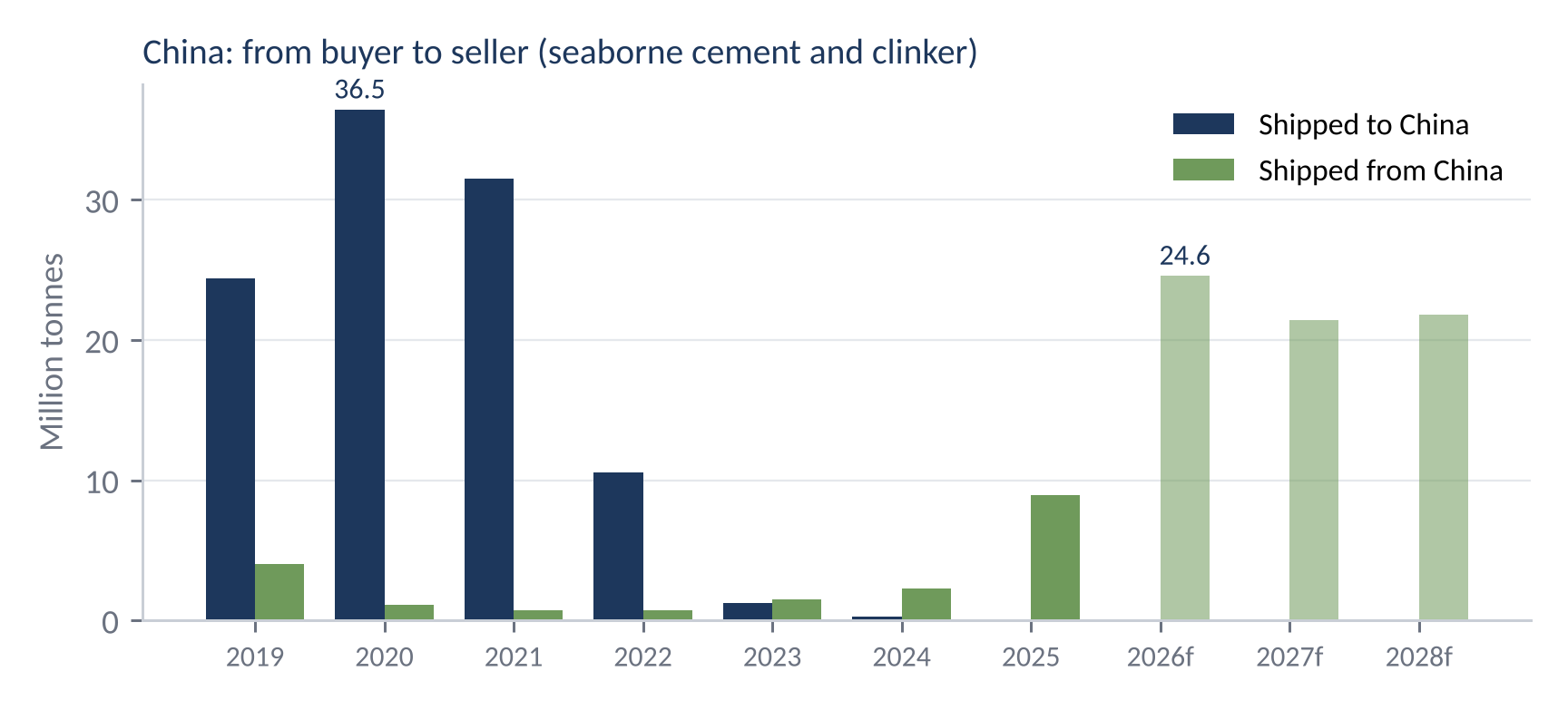
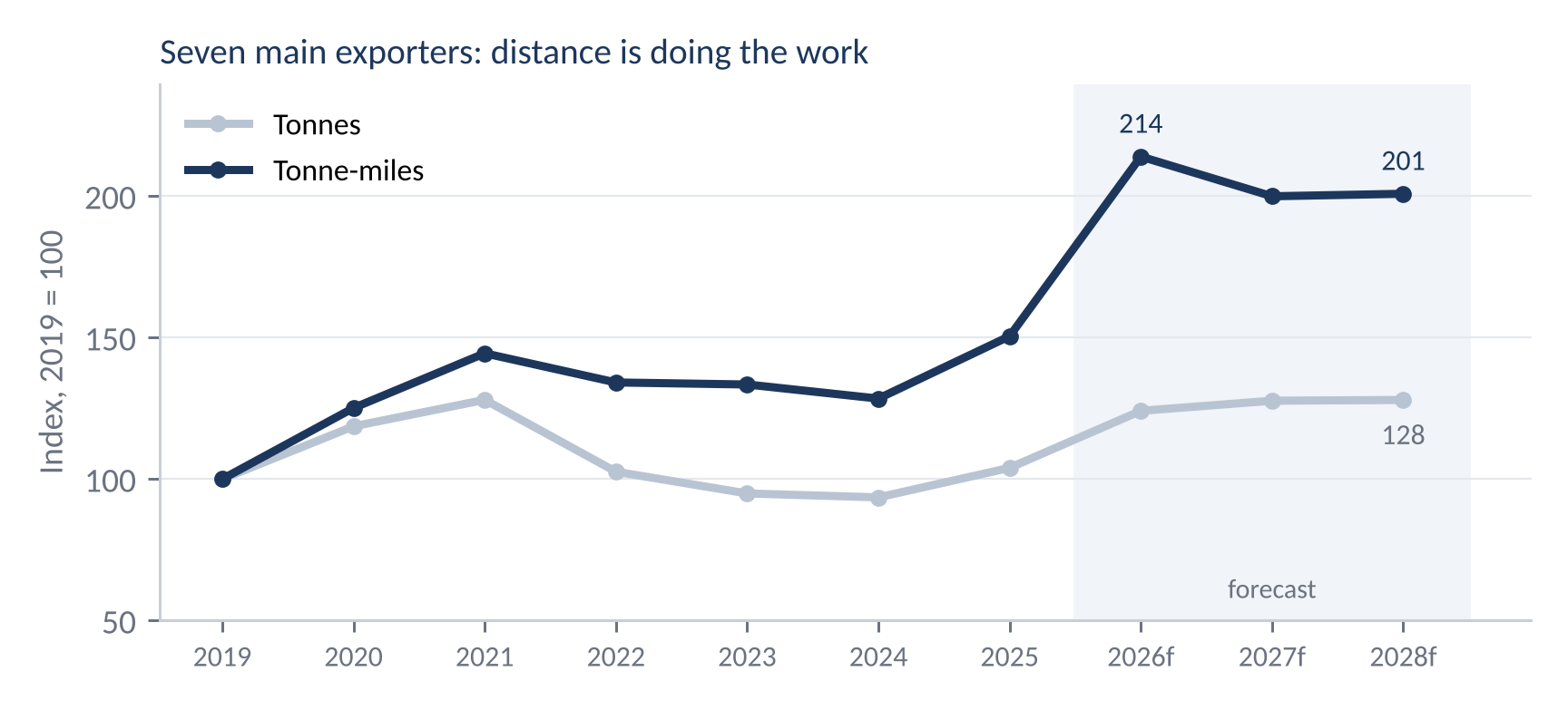
China's property slump has turned Asia's cement trade inside out. China has gone from buying 36 Mt in 2020 to a forecast 24.6 Mt of exports this year. The main exporters are shipping only about a quarter more cement than in 2019, but the tonne-miles have doubled.
Supramaxes are doing most of the extra work. In our view cement tonne-days peak in 2026, ease a little in 2027 and stay around twice their 2019 level through 2028. Cement is a useful prop for Supramax earnings this year, fading in 2027.
From buyer to seller
Not long ago, China was where Vietnam sent its clinker. In 2020 some 36 Mt went there, mostly on short hops from northern Vietnam to southern China, ideal work for Handysizes and Supramaxes shuttling back and forth. Then the property market broke. Building stalled, demand for cement fell away, and Chinese kilns were left running at around half capacity. By 2025 China's imports had all but vanished.
What happened next is the real story. With too much clinker and too few buyers at home, Chinese producers went looking abroad. Exports climbed from under a million tonnes in 2022 to a forecast 24.6 Mt this year, and we expect them to hold above 21 Mt through 2028. About two-thirds of this year's flow is clinker, the bulk intermediate that grinding mills turn into cement, and it is heading further afield: to Bangladesh, the Philippines and, increasingly, West Africa. That is Supramax business.
Vietnam goes further afield
Vietnam lost its biggest customer almost overnight, so it did what any exporter would: it found new ones, further away. Its exports are a mix of roughly 60% cement and 40% clinker, and this year the average cargo looks set to travel about three times as far as it did in 2019. Handysizes still handle the regional runs to the Philippines and Bangladesh, but the long-haul tail goes on Supramaxes and Ultramaxes. Neighbours have not made it easy, with Taiwan and the Philippines both putting up barriers to Vietnamese cement. From 2027 we see some of that long-haul business fading as Chinese clinker competes for the same buyers.
The US: longer, not bigger
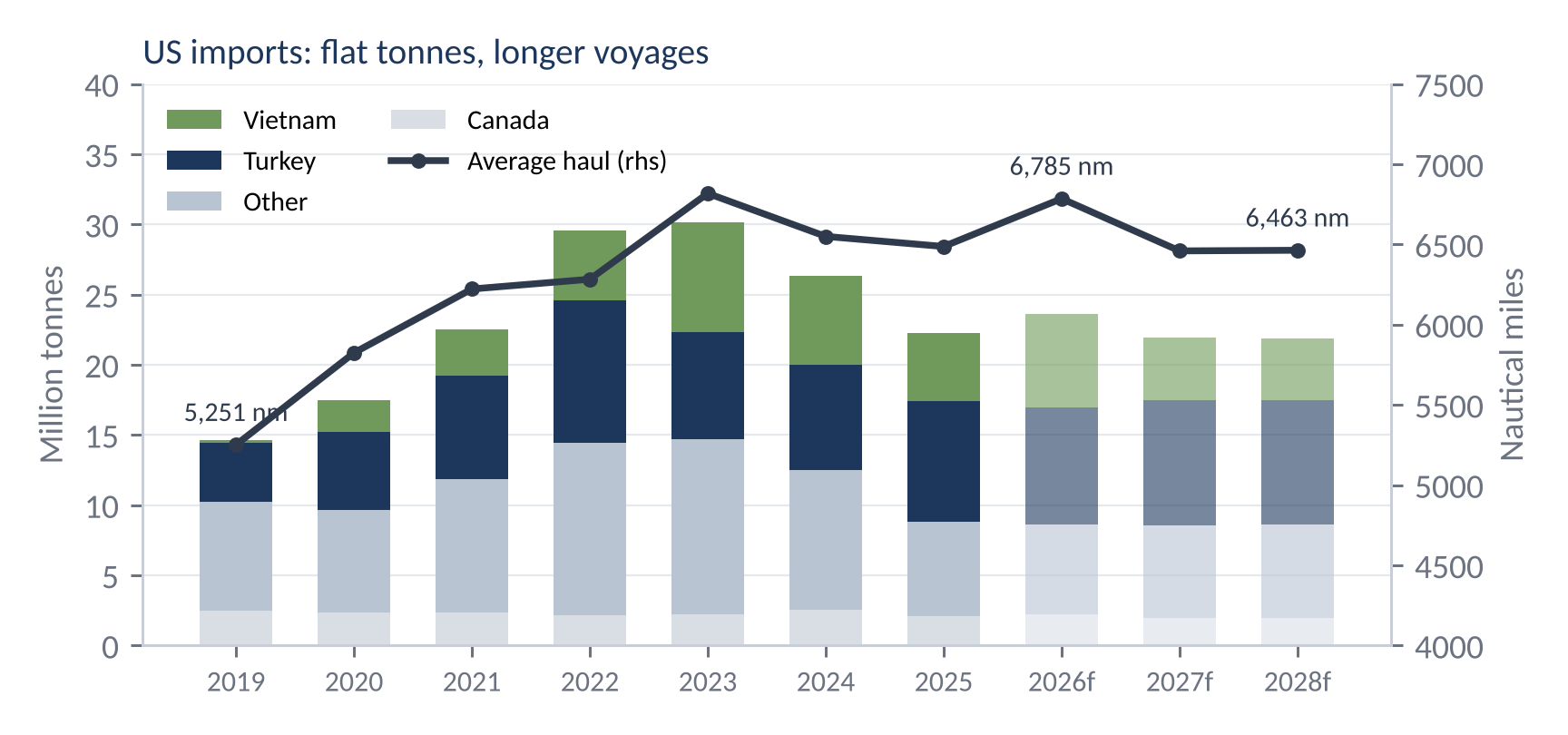
The US shows the pattern most clearly. It is not importing much more cement than a few years ago; it is importing it from much further away. Turkey and Vietnam have taken share from closer suppliers, and the average cargo now sails about 6,800 nm, up from about 5,250 nm in 2019. These are Supramax-sized parcels on some of the longest routes in the trade, and the new 50% tariff on Canadian cement may stretch them further. We see volumes steady at around 22 to 24 Mt a year to 2028, with the voyages staying long.
Distance does the work
Put the main exporters together and the picture is simple. They are shipping about a quarter more cement than in 2019, but the tonne-miles have doubled.
The voyage times make the point. The old Vietnam to China run took about 13 days round trip, port time included. Vietnam to the US Gulf takes a Supramax about 88 days, and China to West Africa about 75. So every million tonnes that moves from the short route to a long one ties up around four more ships for a year, and across the trade the extra distance since 2019 is worth the full-time work of around 110 Supramaxes in 2026. Because the long hauls go on the bigger ships, Supramax tonne-miles in cement from China and Vietnam look set to rise by more than 80% this year, against about a third for Handysizes. Many of these ships ballast home, though some voyages can be linked to a backhaul such as petcoke, for which cement plants are a major consumer.
| Supramax route | Round voyage (days) |
|---|---|
| Vietnam to southern China (the old trade) | 13 |
| Turkey to Italy | 18 |
| Turkey to Ghana | 44 |
| China to West Africa | 75 |
| Vietnam to US Gulf | 88 |
Europe's carbon border
A second force is at work, and this one starts in Brussels. High energy costs made Europe an importer of clinker, the energy-hungry stage of cement making. EU imports grew roughly sixfold between 2016 and 2025, mostly on short runs from Turkey and North Africa. Since January the EU's carbon border charge has put a price on the carbon in that clinker, and European producers want it tightened. Importers stocked up ahead of the start date, and Turkish clinker has already begun turning towards West Africa and the Americas.
For Supramaxes, that is another shift from short haul to long. A round voyage from Turkey to Ghana takes about 44 days, against 18 to Italy.
Building the trade away
None of this lasts forever, and China may be what ends it. Chinese engineering groups, led by Sinoma, are building cement plants across Africa, the Middle East and the Caribbean, and Sinoma's overseas orders doubled in the second quarter of this year. Every new kiln in West Africa means less imported clinker. In effect, China is exporting first the cargo and then the factory that replaces it, while building Chinese economic influence through its inward investment.
Support for the Supramax market
So what does it add up to? Construction cargoes, led by cement and clinker, make up around 8% of Supramax demand. This year they are the largest single source of new work in the segment, ahead of South American grain and iron ore, and they roughly cancel out the loss from coal in Southeast Asia.
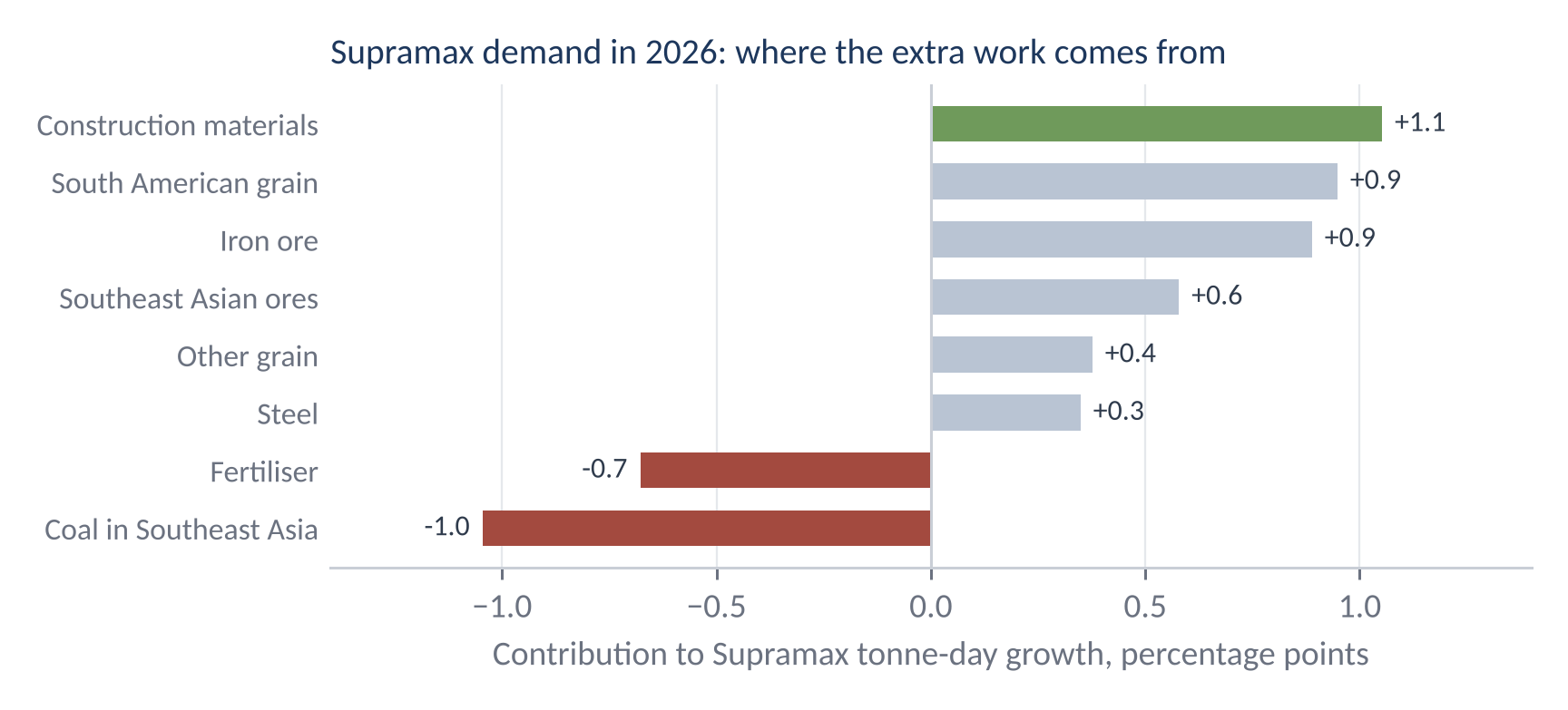
Cement on its own does not set the market, but it helps at the margin. When a fleet is close to fully employed, small changes in demand can have an outsized effect on rates, so the extra miles look supportive for Supramax earnings through 2026. The support fades in 2027 as hauls shorten, then levels out in 2028. Handysizes feel it less, because more of their cement work stays close to home. That is the nature of cement: a local business at heart, with seaborne trade filling the gaps while capacity catches up. Right now the gaps are large, and a long way from the surplus.
Risks and our view
- Upside. Chinese capacity cuts come slower than planned, and tariffs or Europe's carbon border push more cargo onto long routes.
- Downside. Beijing removes its surplus faster, more countries shut out imports, or new plants in Africa and the Middle East start up sooner.
- Most uncertain call. How long China keeps exporting at this pace. Even a modest recovery at home would pull tonnes back quickly.
Our view: China is the catalyst. Its building slump has turned a short-haul regional trade into a long-haul one. In our view cement tonne-days peak in 2026, ease a little in 2027 and stay around twice their 2019 level through 2028. Supramaxes gain most: cement is a useful prop for their earnings this year, fading in 2027.
Behind the analysis
The same country export data and forecasting framework are available to your team, on your own commodities and routes.
Book a demoData note
Tradeviews research. Seaborne cement and clinker trade (HS 2523): customs data to 2025, Tradeviews forecast for 2026 to 2028 (updated October 2026). Voyage times from the Tradeviews voyage calculator (Supramax, 50,000 t, ballast return).
For information only; not investment advice.